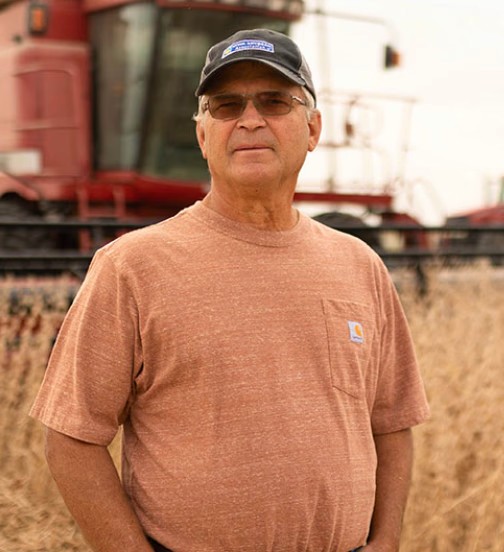
I manage teams and employees, but right now everyone has full access, and it’s hard to control.
At Gripp, we work with clients of all sizes, from small teams of around 10 people to large organizations with over 500 employees. With so many staff members joining and leaving, some clients began requesting more control over what their employees can see. This led to the need for a permissions feature with different access levels to help them manage visibility across their teams.
Team
Client Demand
35%
Client Satisfaction
85%
Context
In the old design, tapping the orange '+' button instantly revealed an invitation code. Anyone could scan and join, gaining full access to all activities, groups, and assets. It felt like a new employee seeing everything from finance to HR at once. For the company, this exposed too much, and for employees, it wasn’t clear where to focus.

Problem
I manage teams and employees, but right now everyone has full access, and it’s hard to control.

I’ve worked here for several years and sometimes onboard new members for packing line work.

I’m a temporary worker who works across multiple farms and sometimes switches between them.

It’s a family-run farm, and I want a simple way to share access with others. Privacy isn’t a concern for me.
Feature Request
Hey Gripp, can we have permission to invite people to specific groups only, instead of the whole workplace? – requested by 4 clients in January.
Interview - Service Blueprint
After reviewing our client personas, I realized that not all farms have the same staffing structure. Some don’t have managers, long-term employees, or seasonal workers/mechanics. Smaller farms may just be run by the owner together with friends or family.
Rob
Manager
I manage teams and employees, but right now everyone has full access, and it’s hard to control.
Mariah
Full-time Staff
I’ve worked here for several years and sometimes onboard new members for packing line work.
Devin
Temporary Worker
I’m a temporary worker who works across multiple farms and sometimes switches between them.
Danny
Farmer
It’s a family-run farm, and I want a simple way to share access with others. Privacy isn’t a concern for me.
Ideation
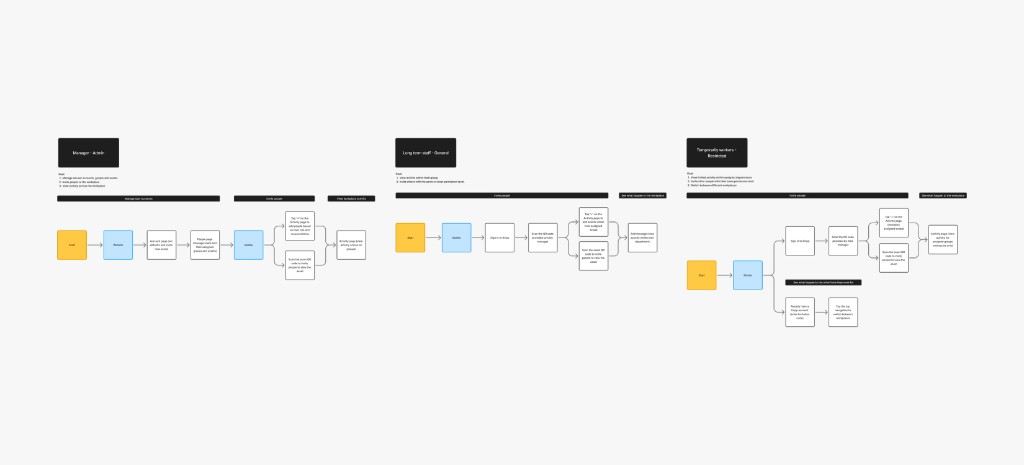
With a clear understanding of the personas and business goals, I explored solution concepts aligned to user needs. After defining the ideal solution, I created task flows for each persona and evaluated the key pages affected across the product.

Before
To help temporary workers stay on top of tasks across different workplaces, I designed notifications that alert them whenever they are mentioned in any workplace.

After
After discussing with the team, we decided to include an All Activity option, which not only lets users stay on top of multiple workplaces but also view their past completed tasks.

Before
Originally, I designed the system so that each company has the flexibility to set different access levels, as each company has different needs.

After
However, considering the timeline and scope, we decided that for the MVP, permissions will be fixed for all companies, since giving flexibility to set them would require extra time.

Before
When designing the names for different permission account types, I chose roles like Manager, Worker, and Viewer, as these are more user-friendly for clients.

After
When reviewing roles with different clients, I noticed that not every client uses the same names like Manager, Worker, and Viewer. Even when they do, the permissions for these roles often differ.
Reflection
I often found myself acting as the intermediary between clients and engineers. In the first few projects, I struggled to convince clients of the value of UX due to a limited number of interviewees caused by budget constraints. However, after gaining some experience, I realized that engaging stakeholders at every stage of the project makes a significant difference. They become more receptive and are able to put themselves in the users' shoes, providing valuable feedback.